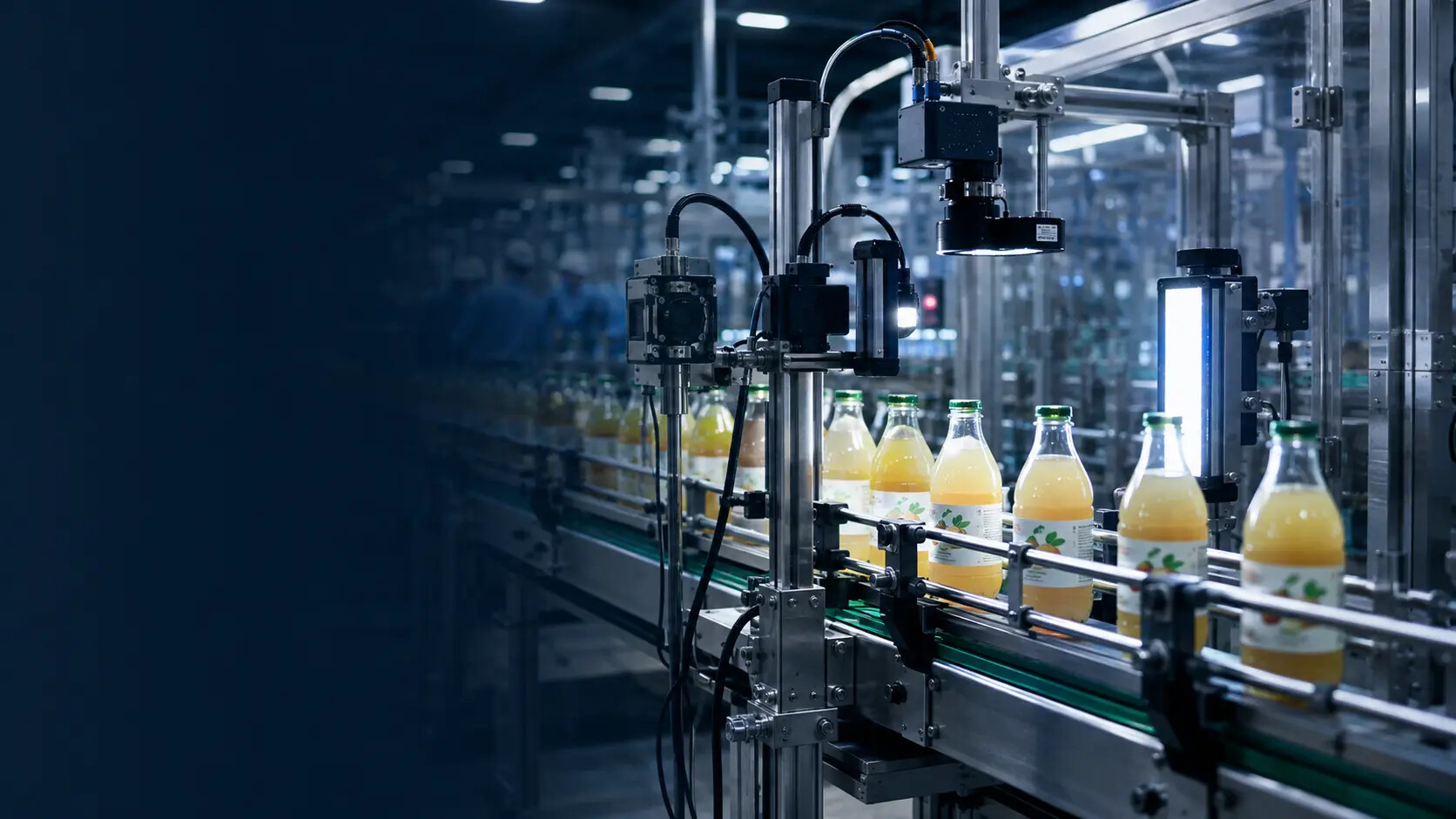
Container geometry
Diameter, taper, shoulders, mould seams and orientation affect what each camera can see.
Inspect front, back, neck and wraparound labels with the camera coverage, lighting, handling and rejection required for your container.
360-degree label inspection checks the visible circumference of a round bottle or jar using several synchronised camera views, controlled product rotation or another application-specific optical arrangement. It is used when faults, artwork, barcodes or variable print may appear anywhere around a wraparound label and cannot be seen reliably by a single camera.
A single front view can be enough for a simple presence check. Full label verification may need two, three or more views, depending on the pack shape, label position and smallest critical feature.
| Coverage | Typical containers | Checks commonly included |
|---|---|---|
| Single view | Oriented flat packs or bottles with one critical panel | Presence, gross position, selected artwork and print |
| Front and back | Flat-sided, oval or consistently oriented bottles | Both labels present, correct pairing, skew and position |
| Multi-view | Round bottles and jars with wraparound labels | Visible circumference, overlap, seam, artwork, codes and print |
| Controlled rotation | Cylindrical packs where rotation can be stabilised | Stitched or sequential inspection of the required circumference |
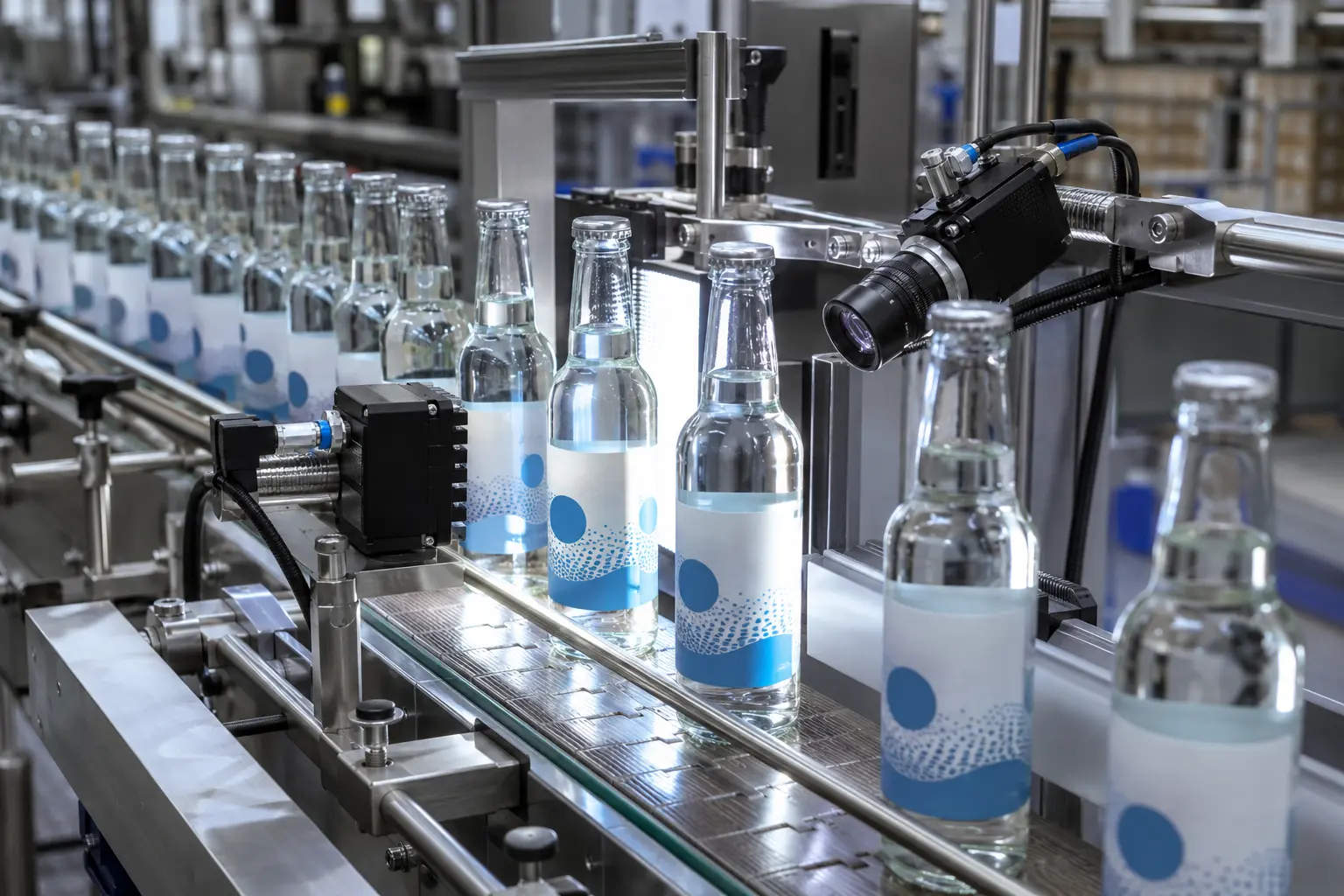
The final inspection recipe can combine application and print checks where resolution and line conditions support them.
Round and reflective packs can change appearance significantly as they rotate. We test the least favourable normal presentation, not only a carefully positioned sample.
Diameter, taper, shoulders, mould seams and orientation affect what each camera can see.
Paper, clear film, metallic areas, varnish and embossing require different illumination.
Speed, pitch, vibration, spin and contact with guides determine image consistency.
The smallest code, character or defect determines resolution, field of view and camera count.
Yes. Separate views can confirm both labels are present, correctly paired and within agreed horizontal, vertical and skew limits. Consistent bottle orientation or controlled handling may be required.
Often yes, but transparent film, container reflections and changing product colour can reduce contrast. Trials with filled production samples establish the most reliable lighting and inspection features.
Not always. Some projects use several simultaneous camera views; others use controlled rotation or a combination. The best route depends on line speed, available space, bottle stability and the label features to be checked.
Yes. The system can track the failed bottle to a pusher, air blast, diverter, drop-flap or line-stop arrangement. Reject confirmation and bin monitoring can be added where the risk requires them.
Include every container size, approved label variant, filled-product appearance, target line speed and the faults you need to catch.