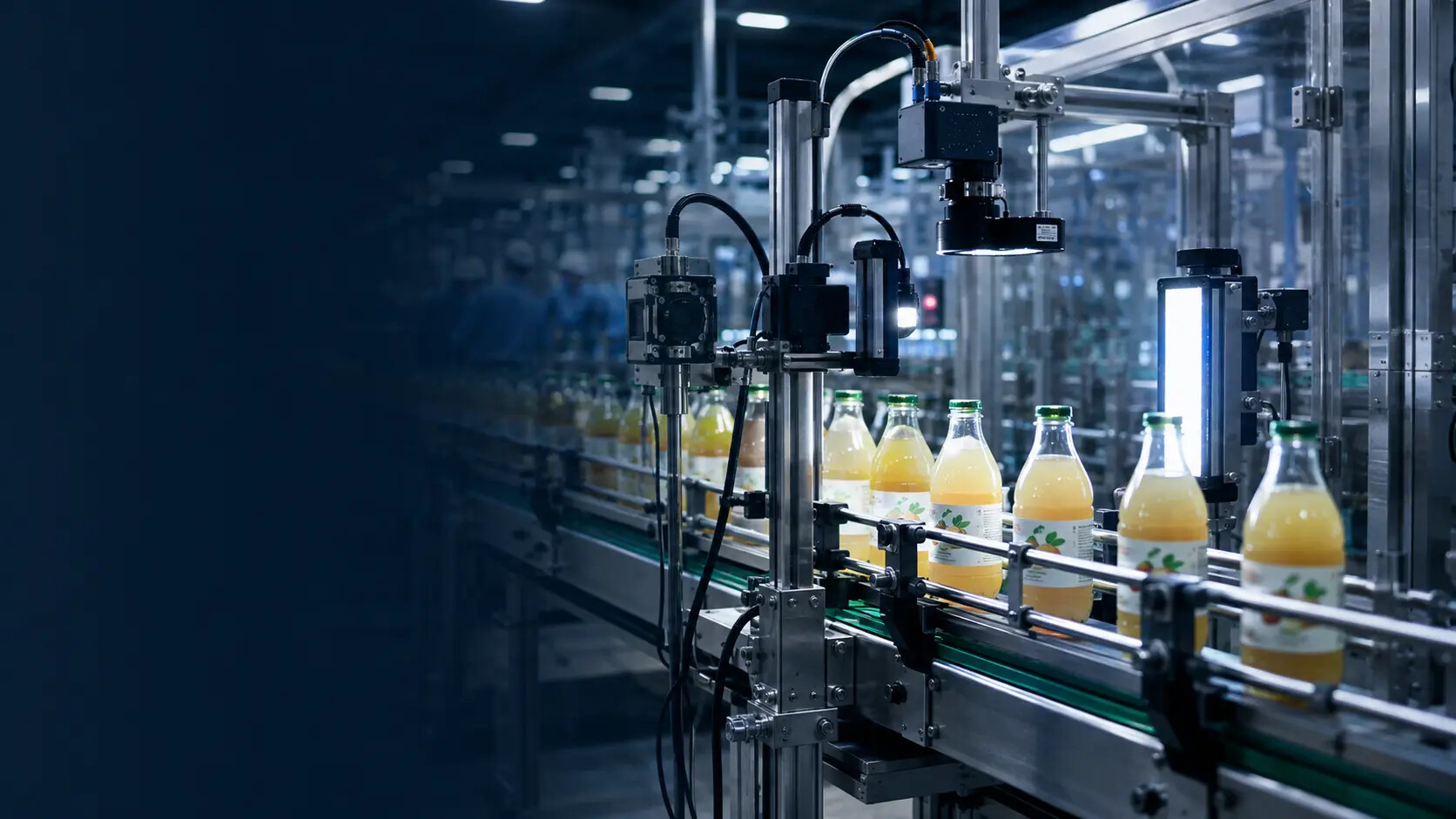
Pack presentation
Measure position, rotation, skew, gap and label pairing against the pack.
Protect pack presentation and product identity across bottles, jars, tubes, pumps and cartons with recipe-controlled vision and contained rejection.
It can verify that the expected label, artwork and printed information are visibly present and correctly applied to each inspectable pack. Typical checks include label height and skew, front/back pairing, wrong-variant detection, colour or logo regions, batch and lot print, barcodes and observable defects in clear, paper or film labels.
The manufacturer remains responsible for approving the legal and technical label content. Vision checks the approved features and data defined in the production recipe.
Measure position, rotation, skew, gap and label pairing against the pack.
Confirm selected artwork, logo and colour features for the active product.
Inspect batch, lot, date and readable codes where the image supports them.
Find defined bubbles, folds, lifted edges, damage and missing label areas.
For regulatory context, see the UK Government’s guidance on cosmetic products in Great Britain. Vision inspection supports a controlled packaging process; it does not replace label approval.
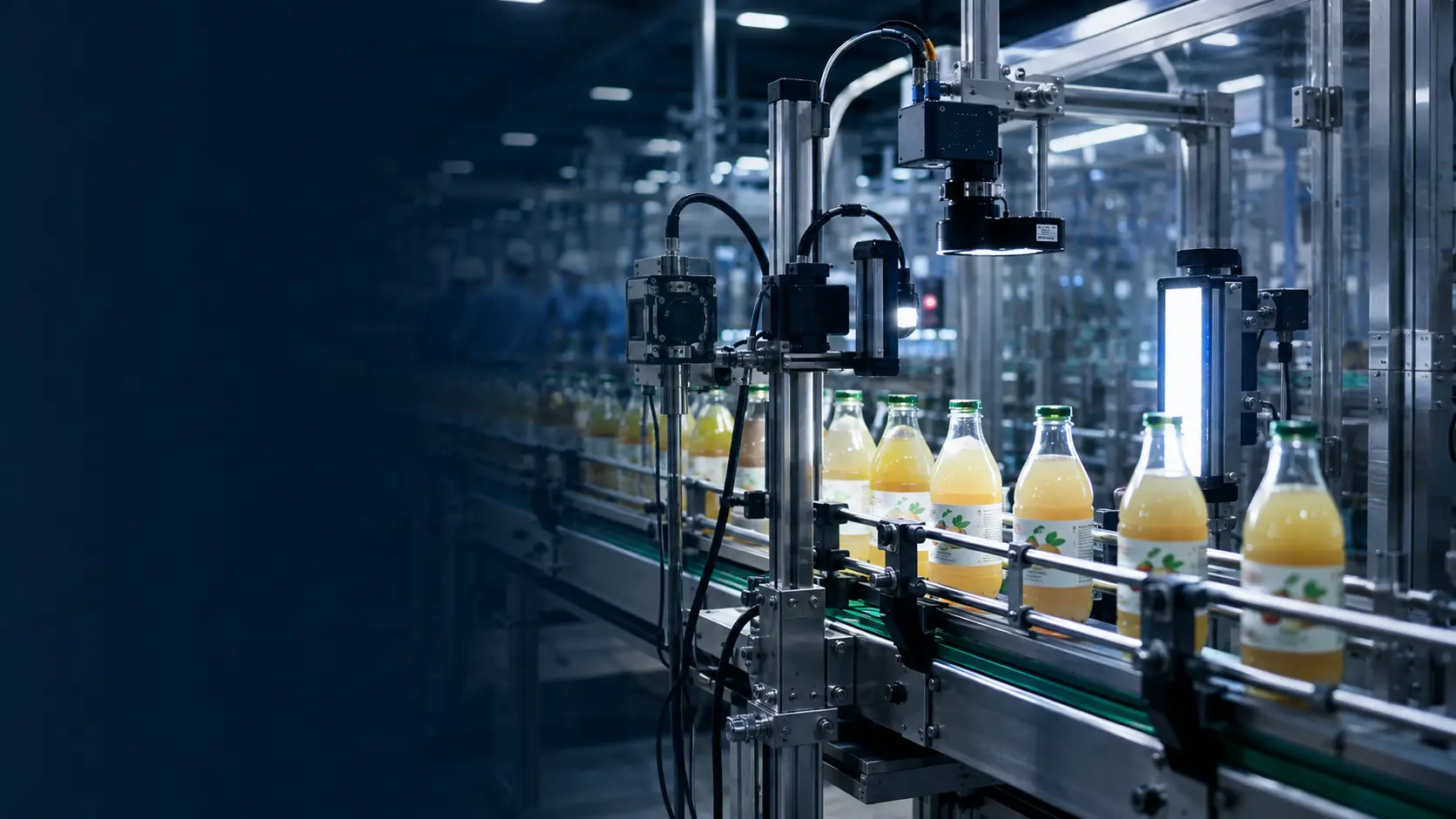
Glossy bottles, clear labels, metallic decoration and curved packs can change appearance with a small movement.
Where product ranges share similar containers, wrong-label prevention depends on distinctive visible features and controlled recipe selection.
Choose artwork, colour, text or code features that reliably distinguish each variant.
Run every approved and known wrong combination with normal print variation.
Reject or stop on a mismatch and record the recipe and defined failure reason.
Often yes, but clear film, glossy containers and filled-product colour require representative trials to establish repeatable contrast and camera coverage.
It can compare visible artwork, colour regions, text or codes with the active recipe when those features remain reliably distinguishable in production.
Yes. Separate views can confirm both labels are present, correctly paired and inside agreed position and skew tolerances.
Potentially, if the code can be presented at sufficient resolution and contrast. A separate view may be required for the base or another hidden surface.
We will review the surfaces, label finishes, distinguishing artwork, batch print, line speed and reject requirements.